
Industry · 6 min read · March 20, 2023
White Porcelain Stone: Price, Features, Uses, Pros and Cons
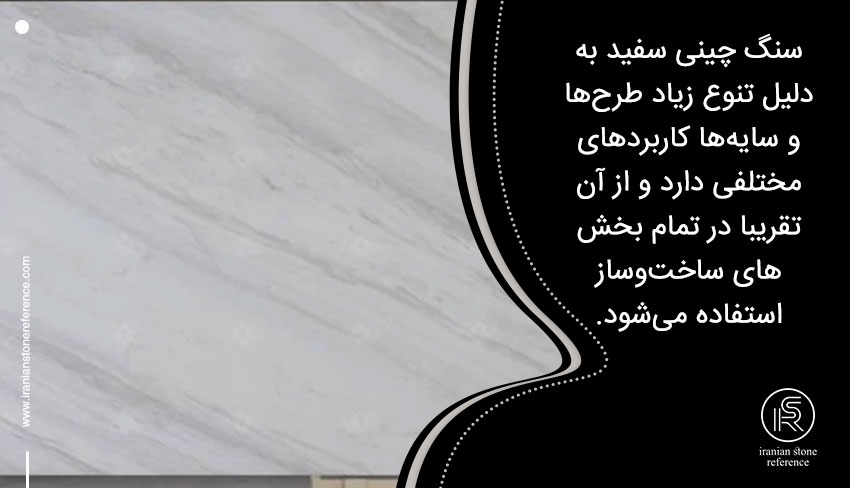
White porcelain stone combines stunning visual appeal with the lowest maintenance requirements and the longest lifespan on the market. Quarried primarily from Iran's Lorestan province and used extensively in both exterior facades and interior spaces, this versatile stone offers excellent resistance to moisture, weather, and chemical cleaners — making it an ideal choice for a wide range of applications.
As a building facade designer, you know well that the ideal material is one that offers the highest resistance and can be used anywhere in the building. As a homeowner, you consider a material good if it has stunning visual appeal and requires minimal maintenance. Very few stones on the market possess all these characteristics simultaneously. One of the most popular and widely used among them is white porcelain stone. Its excellent resistance to weather changes makes it an ideal option for outdoor spaces — a stone that requires the least maintenance, offers the longest lifespan, and can easily be used as flooring, wall cladding, or any other application.
In Iran, porcelain stones are also called "crystal stones" — a highly versatile stone from the limestone family with unparalleled durability and visual appeal, and for this reason it is one of the most popular and widely used stones in the world construction industry. This stone owes its high quality to the high pressure and temperature during firing, and it is available on the market in both glazed and unglazed forms. Interestingly, the primary origin of production of this stone is Iran itself, and its various types — from Aligudarz porcelain to Neyriz and Mashhad — are all extracted from mines within our own country.
As we mentioned, the primary origin of porcelain stone production is our own country of Iran. This stone is extracted on a large scale from mines in Lorestan province and then undergoes processing stages. First and foremost, you should know that the name "porcelain" was chosen due to the visual characteristics of this stone, which appears as delicate and fragile as porcelain. Interestingly, when struck it also produces a sound similar to porcelain dishware! This is the first characteristic of this widely used stone. This stone is light, translucent, with no dark veining and generally a uniform appearance when released to the market — provided it is of high quality and high purity percentage. Some low-quality crystal stones on the market come with dark grey and black veining.
White porcelain stone has various applications due to its wide variety of designs and shades, and it is used in almost all sections of construction. The application depends largely on the shade of the stone. Warm colors are very suitable for interior spaces such as bedrooms or living rooms, and cooler shades are more commonly used in bathrooms and kitchens. You can confidently use crystal stone in the humid bathroom environment because this stone's high resistance results in the lowest water absorption and it is not easily damaged. White in general makes the environment appear larger and brighter, meaning it can replace dark colors in small office or residential spaces, or be combined with them.
White crystal stone is categorized into various types depending on which quarry in which part of the country it is extracted from and the unique characteristics it possesses. Below we will review its different types together so that choosing among them will be easier for you. Qorveh Porcelain Stone: Qorveh or Saiman stone is a type of white porcelain stone used mostly in slab dimensions for interior spaces. The resistance and polishability of this stone are exemplary. Aligudarz Porcelain Stone: This popular Iranian stone with a light white tone and dark veins (grey and black) is of the highest quality, sourced from Aligudarz mines in Lorestan province.
Now let us discuss the advantages and disadvantages of white porcelain stone, which make it an excellent option in some cases and an unsuitable choice in others. One important advantage of white porcelain stone is that at first glance it resembles natural stones and conveys a natural feeling to the viewer, while at the same time having a greater color variety than natural stones. It does not allow moisture to penetrate, is resistant, and requires very little maintenance. On the other hand, one of the notable disadvantages of this stone is its lack of pores, which makes installation somewhat difficult, as it lowers the percentage of adhesive bonding to the tiles. Furthermore, installation of white porcelain requires the use of grout, which has its own specific maintenance conditions.
The last topic we will address in this article is the price of white porcelain stone and the factors affecting it. The selling price of white porcelain stone is usually not fixed and is determined based on a combination of effective factors. However, it can be said that this stone has a good price compared to other market options and much of its popularity is indeed due to this reasonable price. The factors affecting the price of white porcelain stones can be analyzed in three categories: stone analysis, stone dimensions and format, and type of stone processing. By "stone analysis" we mean all structural characteristics such as compressive resistance, abrasion resistance, water absorption rate, and other factors. Naturally, the more and better these are, the higher the determined price.
White porcelain stone is abundantly used as an exterior facade because its maintenance is simple and easy. If hard water deposits or mold cover the stone surface, traces of contamination and stains can be cleaned with a multipurpose cleaning spray. Although the structure of this stone resists chemical, acidic, and ammonia-containing materials, cleaning with these substances is not recommended as they gradually destroy the stone's glaze and damage the surrounding grout. Note that the grout is considerably more delicate and vulnerable than the porcelain itself. If you are using unglazed white porcelain for exterior facade, periodically scrub it by hand with dedicated concentrated tile cleaners to restore its original luster.
We hope that after reading this article you are now familiar with white porcelain stone and all its characteristics, and know in which applications this versatile stone is most commonly used. Thanks to advances in technology and the existence of modern equipment, this durable Iranian stone can compete well with natural stones such as marble and travertine and bring the luxurious appearance you are looking for to the interior or exterior facade of your building. Keep in mind that the selling price of this stone is determined based on the stone analysis, dimensions and format, and type of processing, and its various designs are sold at different prices in the Iranian market.
← Back to Stone Knowledge