
Industry · 6 min read · April 3, 2023
What Is Slab Stone and What Are Its Uses? Types Explained
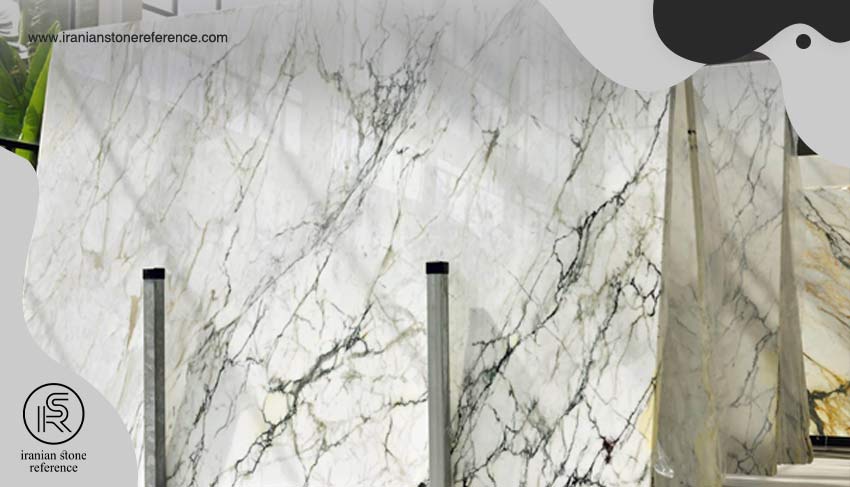
The era of small square stone tiles used for both exterior facades and interior floor and ceiling coverings is over. One look at modern structures makes it clear that this is the era of large slab stones — available in granite, marble, travertine, marmorite, and more — each with its own specific application and serving as a beautiful, eye-catching, and sturdy material on the market.
The era of small square stone tiles used for both exterior building facades and interior floor and ceiling coverings is over. One look at modern structures leaves no room for debate — this is the era of large slab stones, produced and released to market in granite, marble, travertine, marmorite, and other varieties, each with its own specific application, entering the market as beautiful, eye-catching, and sturdy stones. If you have heard the name "slab stone" or have been wanting for a long time to know what a slab is and what it is used for, stay with us until the end of this article.
"Slab" in English means a board, plate, sheet, or leaf. In Persian, it refers to a specific form of stone production that has minimal thickness and is cut into large pieces. These stones — the newest and most modern method of processing raw stone — are cut reciprocally by special blades (saw or wire cut) and enter the market in two forms: edge-trimmed and untrimmed. The thin thickness and relatively large dimensions of slabs make them very suitable for floor paving, wall cladding, or countertop applications. Some of these stone slabs are brushed and fully polished while others enter the market with an uneven surface, and each has its own indescribable appeal.
The visual appeal and stunning facade are not the only advantages of slab stones. In this section we take a look at the most important advantages of this popular stone. Beauty and eye-catching appearance: Stones in general have high appeal — after all, they are part of nature and everything in nature is beautiful. Now imagine these pieces being cut into large panels and polished, which further enhances and highlights their appeal. Strength and durability: As previously noted, slabs are cut to larger dimensions and thickness, which makes this stone more robust. High quality: Slab cutting is of better quality than other cuts (including tile cuts). Easy transportation: Moving slab stone pieces is actually more convenient in many ways, as the large panels can be handled in fewer trips.
If we want to discuss the disadvantages of this stone as well, we must mention its relatively heavy weight, which requires special equipment for transport and installation. These stones have high installation costs and their installation takes a considerable amount of time.
Slab stones are produced and released to the market in large square or rectangular stone panels. These stones have a regular geometric shape and their thickness is usually 2 cm, because the blades of the machines that cut the raw stone are placed 2 cm apart from each other. Regarding dimensions, we can say the minimum width is approximately 70 cm and the length can range from 2.5 to 3 meters. Note that the dimensions of slab stone are directly related to the size of the raw stone or the stone block. The most common slab dimensions on the market are 80×100 or 180×300.
The main application of slab stone as a type of building material is for flooring and the construction of ceilings and walls — such as in ballroom floors, restaurant environments, lobby spaces, courtyards of shrines, mosques, religious pilgrimage sites, bathrooms, and public or residential restrooms. You can even use this stone for the following purposes.
Granite slab stone ranks first in popularity as a kitchen countertop material, because it is one of the strongest and most durable building stones — it has an attractive appearance, covers walls very well, and cleaning it in the constantly greasy kitchen environment is not difficult. It also comes in a good variety. Similarly, you can use quartzite, dolomite, and hard Terrazzo stone for kitchen spaces.
Granite and marble slab are the most popular choices for small bathrooms and vanity spaces. The patterns are so varied that it is virtually impossible not to find a design that matches your taste. Marble, with its slight thickness, simple edge profile, and attractive pattern, lends special elegance to the vanity and bathroom space.
The shower area is an extremely humid zone and there is always a risk of water leakage and mold growth in this area. An intelligent solution to prevent this from happening is using stone slab panels. These stones are inherently water-resistant and easy to clean. Especially if you choose granite and marble stones, their breathtaking beauty transforms the dreary bathroom environment into a relaxing space. You can use these stones around or even on the bathtub.
If you want to prevent wooden cabinets from being damaged by contact with water and moisture, opt for cabinet slab stones. These beautiful countertops made of granite or marble that have replaced ordinary countertops will make your appetite even stronger when dining. These stones fit virtually any type of table, sideboard, and console easily, and as an attractive piece of furniture, they complete the home's decor. Note that the price of these stones varies depending on the material and the quarry from which they were extracted.
If you have an outdoor kitchen that gets dirty quickly and dust settles on it, go for durable granite tables that are extremely easy to clean and serve as a solution for outdoor kitchens. Granite countertops can be said to put your mind at ease about the open outdoor kitchen space and make cooking in it more enjoyable. Natural stone has good resistance to natural elements, even if it remains outdoors for a long time without attention. With a little deep cleaning and periodic sealing, a high-quality slab stone can be protected against water stains and dirt. For a stone like granite, even if metal is placed on the granite surface for a long time, it will not be damaged.
Now that we know what slab stone is and are familiar with its characteristics, let us take a look at the types of slab stone on the market. Azna porcelain slab, Aligudarz porcelain slab, Eskato porcelain slab, Bianco porcelain, Dehbid cream marmorite, Dehbid spider marmorite, President crystal, Agata Black crystal, Panda crystal (Iranian), and Panda porcelain are among the types of slab stones. Below we will review the characteristics of some of them. Azna porcelain slab stone: One of the few quality stones that can be used in all sections of a building with diverse applications. It should be noted that in addition to its excellent appearance and unique quality, Azna porcelain slab stone is also reasonably priced.
← Back to Stone Knowledge