
Onyx · 8 min read · March 20, 2023
Complete Guide to Onyx Stone: Properties, Types, and Care
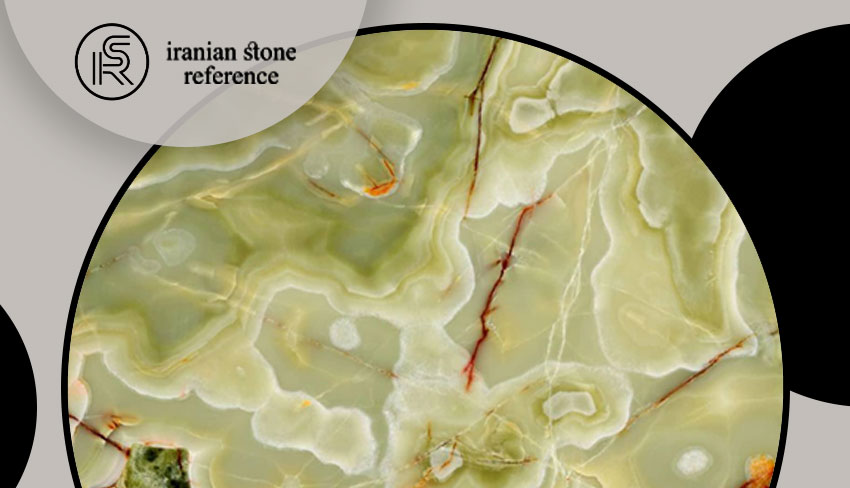
Onyx is a semi-precious, semi-fantasy natural stone with a history stretching back to ancient jewelry use. Today it's prized in architecture for its unparalleled beauty — translucent layers, amber waves, and a luminous glow that no other stone can match. This guide covers everything you need to know about onyx: its formation, types, applications, and care.
Onyx slab is a semi-precious, semi-fantasy stone with an ancient heritage — used for centuries as a gemstone and now beloved throughout the construction industry for its limitless beauty. With its uniquely stunning visual characteristics, it forms inside caves across the world and comes to market in white, green, black, pink, brown, blue, and more. If you're considering using onyx in your interior or exterior design, read on as we explore this extraordinary stone in full detail.
Onyx is one of the most sought-after natural building stones, found in white, green, black, and other colors — with Turkey, Brazil, the United States, and Iran as the world's leading suppliers. Its beauty is truly boundless. Its translucency and luminosity are unlike any other stone — filled with undulating amber layers and irregular ivory veins that create a mesmerizing visual effect. Color and pattern variety in Iran's market is exceptional. This remarkable stone, formed from the recrystallization of limestone, beautifully transmits light and emits a soft, ethereal glow — making it a preferred decorative backlit stone for creating dramatic effects in architectural spaces.
While granite, quartzite, and marble form deep within the earth's crust, onyx forms right at the earth's surface. It originates from spring water or groundwater containing high concentrations of dissolved calcite. As this water flows from a spring, the minerals within it precipitate and form a crust of calcite crystals. Over time, more water flows through the site, depositing additional minerals. The variations between layers are caused by changes in flow rate and the presence of trace impurities. Onyx can also form inside caves or other cavities in the bedrock — essentially anywhere groundwater or spring water flows in a confined space.
One of the most extraordinary characteristics of onyx is its remarkable translucency and light transmission, which lends a spectacular quality to any area of a home or office. This semi-precious stone — whose origins trace back to ancient Greece and Rome — is, despite its breathtaking beauty, relatively soft and fragile. It cannot withstand even minor impacts and must be handled with great care during transport and installation. Onyx is also susceptible to scratching, so it should not be used in high-traffic areas. Reserve it for parts of the home with minimal contact — such as wall cladding or ceiling panels. Annual (or biannual) sealing is also a key characteristic to factor into your planning.
Here is a look at some of the most beautiful onyx varieties available on the market: White onyx — this stunning white stone contains micro quartz crystals with breathtaking gold and gray veining; it can be used in residential and commercial applications, though it is most commonly used for countertops and flooring. Brown onyx — one of the most attractive onyx varieties, with a distinctive pattern that is extremely popular for both interior and exterior design. Blue onyx — a stone with a smooth, regal surface full of royal beauty, most widely used in residential and commercial spaces for its exceptional decorative qualities. Yellow marble onyx — another striking variant with unique coloration used in high-end interior accents.
As a relatively fragile stone, onyx is quickly damaged in high-risk environments like kitchens — scratching easily and showing impact marks. Using onyx as a countertop surface is therefore only sensible if the counter serves a purely decorative purpose and sees little actual use. Luxury restaurants and resorts use onyx with backlighting to create a spectacular visual glow. Some designers incorporate it in bathroom vanities or as an accent wall in residential spaces. In general, onyx is well-suited for both vertical and horizontal decorative applications — including tabletops, flooring, wall cladding, furniture, accessories, and lobby installations.
Onyx is a fragile stone and requires careful maintenance to preserve its natural beauty. Always use mild soaps to clean it. Never use acidic cleaners — they will quickly corrode and scratch the surface. Clean the stone with a soft brush, then wipe it dry with a clean cloth. Onyx should be sealed once a year.
As we've noted, onyx slab is one of the most luxurious and premium stones in the world, commanding a relatively high price. Its unique ability to transmit light has made it more expensive than other natural stones and well-suited for high-end luxury projects — used in various applications such as stair treads or flooring in grand reception halls. The higher the processing quality — precise cutting and superior polishing — the more expensive the stone. While onyx prices vary greatly by type and color, none of its varieties make economic sense for projects with limited budgets.
Onyx slab, as a luxury decorative stone, is not suitable for every application — but wherever it is used, its remarkable appeal creates a truly spectacular visual statement. No one can walk past it without pausing to admire the dance of its layered patterns and the extraordinary interplay of light across its surface. This is precisely what makes onyx an exceptionally popular choice for interior design and lobby installations. Keep in mind that onyx differs from other natural stones like marble and granite in its physical properties. When selecting onyx for a specific application, exercise the utmost care and account for all of its notable characteristics — including its fragility and susceptibility to damage — before making your decision.
← Back to Stone Knowledge