
Marble · 6 min read · March 4, 2023
Everything You Need to Know About Lashtar Slab Stone
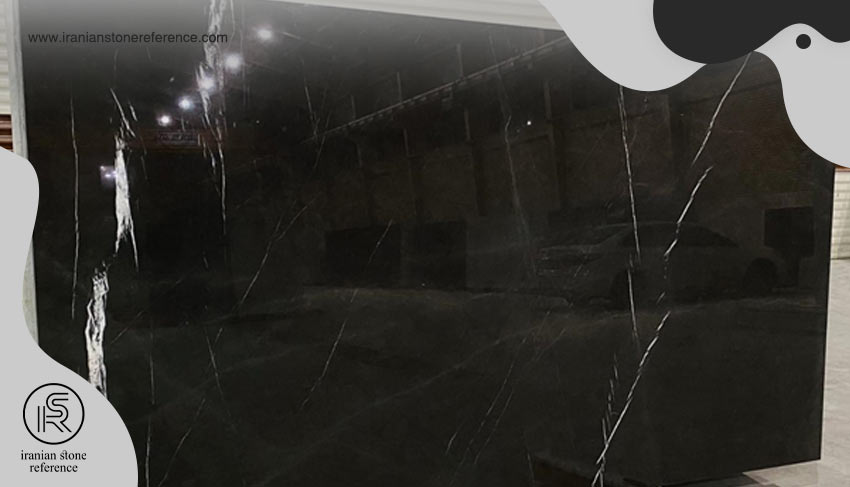
Lashtar slab stone is a distinctive, delicate, and timeless natural stone whose unique texture and pattern has been used for centuries in the architecture of luxury and grand buildings, conveying a blend of modern and traditional feeling. Its various shades lend a luxurious appearance to residential and commercial buildings, creating a classic atmosphere that is desirable and ideal for any home or office.
Lashtar slab stone is a distinctive, delicate, and timeless natural stone whose unique texture and pattern has been used for centuries in the architecture of luxury and grand buildings, conveying a blend of modern and traditional feeling to the viewer. Its various shades lend a luxurious appearance to residential and commercial buildings and create a classic atmosphere that is desirable and ideal for any home and office. Its relatively high resistance and unique beauty make it applicable in various interior and exterior facade types, flooring, and building landscaping. Stay with us to become familiar with the details of the characteristics of this popular stone.
Lashtar stone is a beautiful and captivating natural stone from the marble family with a dark grey to black background and bright veining, whose breathtaking appeal makes it famous among connoisseurs and the general public worldwide. Famous not only for its beauty — but its excellent quality and resistance in the building industry have received extraordinary attention and for this reason it is placed in the category of the world's best-selling stones. Lashtar is extracted from a region of the same name in Isfahan province and this is the reason for its naming. The mines of this stone are located 40 km from the city of Isfahan and every month large quantities of this stone are sent to the production line. This has made Isfahan province the first center of production and distribution of this natural stone.
If you are not a stone expert, you might confuse Lashtar with Italian stone at first glance. Although this stone is abundantly produced in stone cutting factories in China, Turkey, and Italy, a large portion of its exports is exclusively in our country's domain. Lashtar, due to its extensive application and good resistance, is produced in various dimensions such as tile or book match (Bookmatch) or four match (Fourmatch or Quadmatch) slabs for use in covering interior and exterior building surfaces. In the past, due to lack of facilities, Lashtar slab stone was produced without surface finishing and released to the market; but today, given advances in science and in view of its capabilities, this stone is processed in polished, bush-hammered, honed, leather, sandblasted, hand-chiseled, and other finishes.
Lashtar stone is one of the most expensive and popular stones in domestic and international markets that has been exported on a large scale from the distant past and has had fans everywhere in the world. This stone, due to its durability, beauty, and inherent grandeur, is one of the well-known stones in the world. Processing this stone in slab and smaller tile dimensions has been able to reveal a special face of this stone. Among the characteristics and capabilities of Lashtar one can point to low water absorption, beautiful color, good resistance to abrasion and pressure, high density, long lifespan, and excellent application in public spaces.
Every stone has its own specific maintenance and care conditions for better longevity. The first point is regular dusting with a soft cloth or vacuuming so that dirt does not accumulate on the stone surface in the first place. For greater brilliance, under no circumstances wash the surface of Lashtar slab stone with acidic or abrasive cleaners; periodically clean the stone surface thoroughly with a mild cleaning solution and a moist cloth. Be sure to apply sealant around the stone so that under no circumstances it separates and has a longer lifespan. With proper maintenance and care, you can keep this marble stone fresh and polished for several years.
Lashtar slab stone — due to its unique beauty, strength, and durability — has many applications with various finishes and can be used in virtually any location you can imagine. The polished surface of this stone is very suitable for building interiors and the various sandblasted finishes are more commonly used in open spaces and landscaping. Some common applications of Lashtar slab stone are: in public places such as lobby floors, cinemas, restrooms, apartment hallways, and coffee shops using beautiful and unique polished Lashtar stone and slab. Interior wall and stair cladding. Courtyard paving, paving of commercial, administrative, residential, and religious units. Landscaping and building facade from bush-hammered Lashtar marble. Decorative elements such as fountains, fireplaces, and kitchen countertops.
The factors affecting the price of Lashtar stone are the type of stone, other slab stones, extraction costs, type of cutting and processing, quality grading of the stone, purity percentage and veining on the stone surface, transportation costs, and the degree of opacity of the background color. The larger the stone's dimensions and the more precise the stone cut, the higher its price will naturally be. Similarly, the thicker the stone's diameter, the more expensive it is. Some stones deteriorate during processing or their price decreases; therefore the absence of impurities is one of the most important factors influencing pricing of the stone. On the other hand, smooth edges become rough from the impacts and collisions of transportation, weakening and devaluing the stone. When purchasing Lashtar stone, pay attention to its edges. The smoothness of the edges must not have been lost during transportation or from impacts.
Lashtar marmorite stone — alongside all the advantages and merits it has — has one major disadvantage, and that is the high price of this stone. This is why it is more commonly used in luxury building projects with large budgets such as large commercial centers and is less used in ordinary residential buildings. Another disadvantage of some types of this stone is the presence of burning that over time causes the stone to delaminate. When purchasing, look for a stone with less burning that is of higher quality. Also remember that although this stone is from the marble family, it shows lower resistance to sunlight and acidic substances compared to marble. Keep in mind its lower hardness. Finally, be aware that before deciding, examine its less resistance against sunlight and acidic materials more carefully.
In this guide we became acquainted with Lashtar slab stone and all the important details related to it. This beautiful and timeless stone is abundantly used for making decorative elements and building construction, and due to its relatively high resistance, low water absorption, and unique beauty it has many fans throughout the world. This stone is used in various interior and exterior facades, bathrooms, floor and wall of residential, commercial, and administrative construction projects, and is infinitely popular for wall cladding, stairs, flooring, landscaping, and making decorative artifacts such as fountains, fireplaces, and kitchen countertops.
← Back to Stone Knowledge