
Marble · 6 min read · March 20, 2023
Lashtar Marmorite Stone: Everything You Need to Know
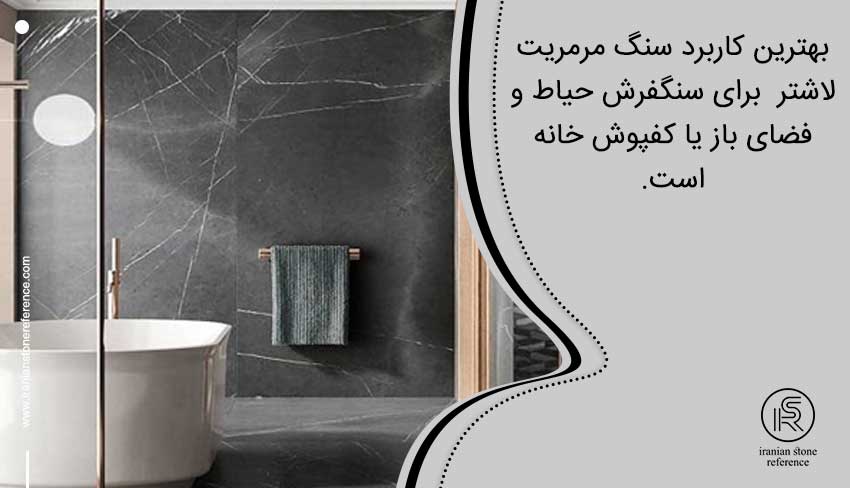
Lashtar marmorite is a natural stone with delicate grey veining that at first glance resembles Italian stone — widely used in both modern and traditional architecture. Its luxurious appearance has fans in virtually every residential and commercial building, and its excellent resistance makes it suitable for high-traffic indoor and outdoor spaces.
Lashtar marmorite is well known to everyone — an infinitely delicate and beautiful natural stone with light grey veining that at first glance resembles Italian stone, and is widely used in both modern and traditional building architecture. The luxurious appearance of this upscale stone has fans in virtually every residential and commercial building, and thanks to its good resistance, it can be used with confidence in high-traffic interior and exterior spaces. If you plan to use this stone in various sections of your home, be sure to stay with us to the end of this article.
Lashtar marmorite stone has a black base with fine and coarse white quartz veining. This stone is quarried in Iran and as an Iranian stone has fans all around the world. Although many stone factories in China, Italy, and Turkey produce this natural grey-colored stone, the primary origin of Lashtar marmorite is the city of Isfahan in Iran — or more precisely, a region called Lashtar located 40 km from Isfahan. The appeal of this stone becomes breathtaking when used in book match and four match layouts for luxurious construction projects. Even setting aside the aesthetic aspect, the excellent quality and resistance of this stone places it in the top tier of building stones.
The days are gone when Lashtar marmorite stone was offered on the market in its raw extracted form without surface finishing due to lack of facilities. In today's world, the attractive Lashtar marble is released to the market with polished, bush-hammered, honed, leather-polished or leather bush-hammered finish, sandblasted finish, hand-chiseled, hammer-polished or bush-hammered, scratch-polished, honed, flamed, cubic, and tumbled finishes, each with its own specific applications. For example, if the veining on the stone is white, it is processed as book match and four match slabs to further enhance its beauty.
Lashtar marmorite stone is widely used on building facades due to its excellent resistance to harsh weather conditions — so much so that it was even used in the construction of the famous Naqsh-e Jahan Square in Isfahan and lent it a pleasing beauty. Among the physical characteristics of Lashtar marble, one can point to its low water absorption, slight slippage, excellent resistance to abrasion, resistance to pressure, excellent density, good durability, and attractive appearance, which nearly fulfills all the expectations of interior and exterior designers for luxurious construction projects. Fortunately, this stone is produced in all widely used dimensions, from slabs to small tiles, to meet all buyer needs.
The best use of this timeless stone is for courtyard paving and open spaces or as home flooring, because it has good anti-slip properties and prevents slipping. On the other hand, due to its excellent resistance to pressure, it can easily be used in busy and high-traffic environments. It can even support the weight of a vehicle and is a good option for parking floor coverage. If you need a dark stone for high-traffic or high-use surfaces that doesn't show dirt and contamination easily, definitely consider Lashtar marmorite stone. Another application of this stone is in various sections of buildings and bathrooms, since with its capability of minimal water absorption it can be used in the always-humid bathroom environment.
The price of Lashtar marmorite stone depends more than anything else on its size and dimensions. Naturally, slab stones cut in larger dimensions are priced higher than small Lashtar marmorite tiles. Additionally, factors such as the type of processing, the stone's quality grade, degree of purity, and its design and color — alongside transportation costs and other considerations — affect the price of this beautiful stone. Note that the larger the stone's dimensions and the more precise the cut, the higher its price. Greater thickness naturally also increases the stone's price. When purchasing Lashtar stone, pay attention to the stone's edges. The smoothness of the edges must not have been lost during transportation or from impacts. If so, the value and price of the stone in question will be reduced.
We said that this stone has excellent durability and longevity — but only on the condition that you provide the necessary maintenance and care. First and foremost, you must not neglect regular dusting of this stone. Occasionally vacuum it and then wipe it with a soft cloth to remove dust. For removing harder dirt, the best option is to use mild cleaning agents. Under no circumstances attack Lashtar marmorite with acidic or abrasive cleaners, and do not damage the stone's texture merely for the sake of greater shine. Rest assured that with proper maintenance and care, this durable stone will grace your home in ultimate beauty for many years to come.
The purpose of writing this article was to compile all useful and practical information about Lashtar marmorite stone so that you can make your choice with open eyes and full awareness of this stone's characteristics, applications, and price. You now know how suitable the unique characteristics of this timeless stone — such as its good resistance, breathtaking beauty, and low water absorption rate — are for covering walls, stairs, flooring, and landscaping of luxury construction projects, residential homes, and commercial buildings. If you have more information about Lashtar marmorite, please share it with us and our readers in the comments section.
← Back to Stone Knowledge