
Granite · 7 min read · June 7, 2023
Granite for Cabinets: From Purchase to Installation
Granite is one of the most popular natural stones for kitchen countertops — durable, heat-resistant, and strikingly beautiful. This guide covers everything you need to know about granite for cabinets, from choosing the right type and finish to installation and maintenance.
Choosing the right countertop material isn't easy — the market offers a bewildering range of natural and engineered options, particularly given the variety of surfaces that have been used as kitchen cabinet coverings in recent years. Granite for kitchen cabinets is one of the most popular choices among interior designers and architects, prized for its breathtaking beauty that elevates a home's value both aesthetically and financially. It is a material that retains its beauty for generations and offers unmatched durability. In this article, we walk you through everything you need to know about granite countertops — from purchasing to installation.
Granite is an igneous rock and one of the most abundant natural stones on earth, composed primarily of feldspar, mica, and approximately 20% quartz. It is mainly quarried in Italy, China, Brazil, India, and Norway. Due to the advantages we'll discuss below, granite is one of the most widely used building stones for flooring and wall cladding throughout the home — particularly in kitchens. Granite slabs, in particular, are far more popular than small tiles for countertop applications. When choosing granite, you can select from polished, brushed, or sandblasted finishes depending on the space and your design preferences.
Key advantages of granite for countertops include: Heat resistance — as an igneous rock, granite withstands extreme heat and pressure, making it ideal for kitchen counters constantly exposed to hot pots and pans. Scratch resistance — granite is hard enough that it does not scratch or crack easily, which is the primary reason for its exceptional longevity. Seamless slabs — with granite countertops, you can have a single large slab cut to your exact dimensions with no visible seams between sections.
Alongside its many benefits, there are a few considerations to keep in mind when purchasing granite for countertops: Limited color variety — unlike engineered materials, granite has a comparatively narrower range of colors and patterns. The most common options are white and black granite, which are among the more affordable varieties. However, blue, pink, and brown granites are also available for kitchen and bathroom décor. Maintenance and sealing requirements — granite is naturally porous, which makes it susceptible to bacteria, mold, and other microorganism growth within its mineral pores. Regular sealing is essential to prevent staining and microbial buildup.
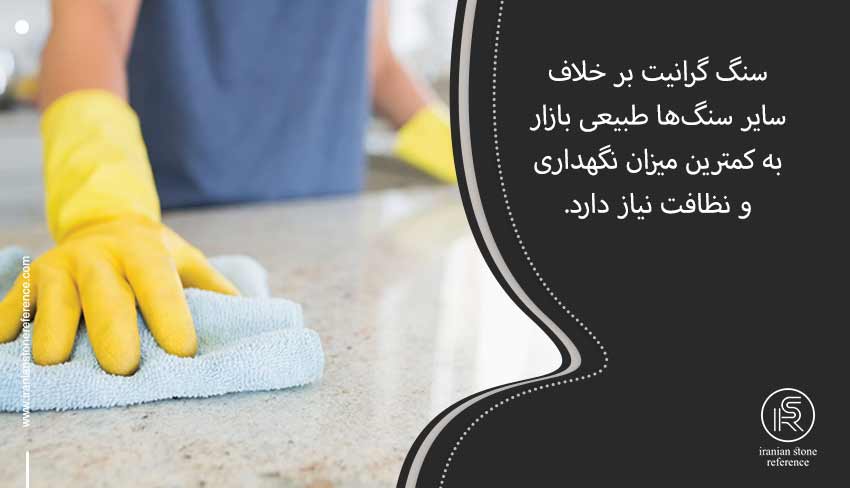
Granite requires minimal maintenance compared to other natural stones. The most important step before installation is sealing the stone, which eliminates concerns about staining and bacterial or mold growth in the pores. For day-to-day cleaning, use a soft cloth, a small amount of water, and a neutral cleaning solution. Avoid acidic cleaners and sharp objects, as these will damage the sealer coating. Dilute the cleaning solution with water, pour it into a spray bottle, spray it on the stone surface, and wipe clean with a cloth.
Granite is extraordinarily durable compared to other natural stones and can easily last over a century. While its longevity is largely due to its inherent hardness and resistance to scratches, heat, and chemicals, you can further extend its lifespan through proper care and regular maintenance.
Like all hard stones, granite comes at a premium price — much of which reflects the high cost of cutting and processing this hard material. Prices vary considerably based on quality grade. In Iran's current market, Mashhad Pearl granite is among the most affordable options for countertops, while Natanz Black granite commands the highest prices.
If you're planning to use granite for your countertop, one common question is about slab dimensions. Fortunately, granite is typically cut in large formats to meet market demand. Large granite slabs are usually 2 to 3 cm thick and come in sizes ranging from 2.5 to 3 meters.
Despite the relatively limited color variety, granite still offers a wide range of choices — from coarse-grained patterns to more homogeneous designs. You can also choose between polished, matte, or leathered finishes based on your kitchen's interior style. Polished finish: in homes with classic décor featuring opulent, ornate elements, a polished granite finish is the more natural and popular choice — its shine beautifully complements the grandeur of carved woodwork and decorative details. Matte and leathered finish: in neoclassical or modern interiors where a more understated aesthetic is preferred, a matte or leathered granite surface is the more fitting and elegant choice.
Once you've selected your granite, made the purchase, and had it delivered to your project site, the installation team secures the stone panels to the cabinet using specialized screws and adhesive, ensuring no visible gaps between panels. Any excess adhesive is removed after the surface is sealed. We strongly recommend leaving granite installation to experienced professionals — these are heavy slabs that must be placed with absolute precision and care. Also consider exploring our guide on engineered stone countertop options.
In this article, we've covered everything you need to know about granite countertops — from selection to installation. Keep in mind that granite's legendary durability is only guaranteed with proper, consistent care. If you lead a busy lifestyle, can't maintain regular stone cleaning routines, or can't avoid spills and colored liquids on the counter surface, you may want to consider stones that require less upkeep. But if you're willing to give granite the attention it deserves, it is one of the most beautiful and enduring countertop materials available — an investment that pays for itself many times over.
← Back to Stone Knowledge